


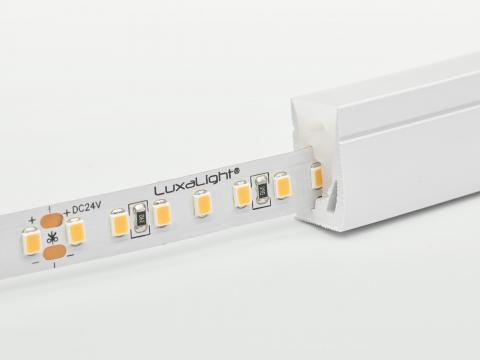

LuxaLight Industrial LED Fixture Transparent cover Deep Red 660nm 24.2x16mm (24 Volt, 2835, IP64)
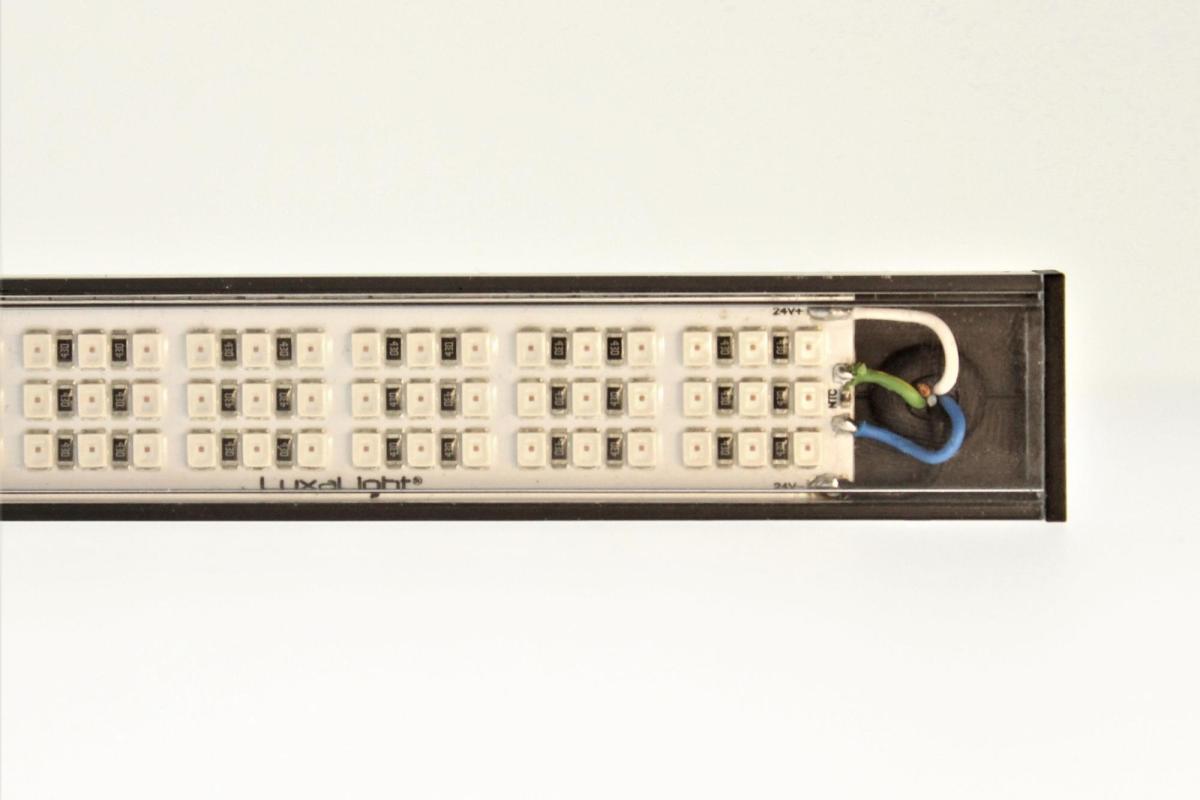


Technical specifications
| 24V | |
|---|---|
| 5cm | 26980 lx |
| 10cm | 10420 lx |
| 15cm | 5294 lx |
| 20cm | 3242 lx |
| 25cm | 2179 lx |
| 30cm | 1653 lx |
| 24V | |
|---|---|
| 5cm | 2485.19 umol/m2 |
| 10cm | 928.214 umol/m2 |
| 15cm | 473.499 umol/m2 |
| 20cm | 295.018 umol/m2 |
| 25cm | 198.704 umol/m2 |
| 30cm | 150.551 umol/m2 |
- By combining Pulse Mode with Real-Time Monitoring, the efficiency of LED systems can be increased, resulting in higher output.
- We have the expertise and equipment to perform measurements tailored to the specific requirements of the application.
| Symbol | Function |
|---|---|
| V+ | V+ |
| GND | Ground |
| NTC | NTC sensor |
| NTC_GND | NTC ground |
Beta value: 3950
Related
LuxaLight Industrial LED Fixture Transparent IP68 Deep Red 660nm 24.2x16mm (24 Volt, 2835, IP68)
LuxaLight Industrial LED Fixture Opaline cover Deep Red 660nm 24.2x16mm (24 Volt, 2835, IP64)
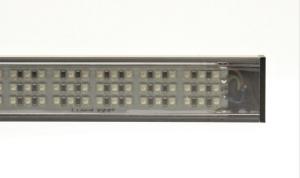
LuxaLight Industrial LED Fixture Polarised cover Deep Red 660nm 24.2x16mm (24 Volt, 2835, IP64)
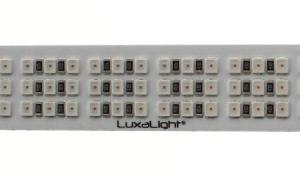
LuxaLight LED Engine Deep Red 660nm Protected (24 Volt, 108 LEDs, 2835, IP64)
Product description
The LuxaLight Industrial LED Fixture Transparent Cover Deep Red 660 nm (24.2 × 16 mm) is engineered for industrial applications that require durable, precise, and high-intensity red light. Its modular design (scalable from 220 mm up to 3000 mm), transparent cover optimized for deep red light, and integration with the MaNima Pollux Industrial System provide a versatile solution for horticulture, biological research, phototherapy, and industrial curing.
Specifications
| Property | Value / Description |
|---|---|
| Wavelength | 660 nm (deep red, measured peak 662 nm) |
| Optical Output | High radiant intensity, tailored for deep red industrial applications |
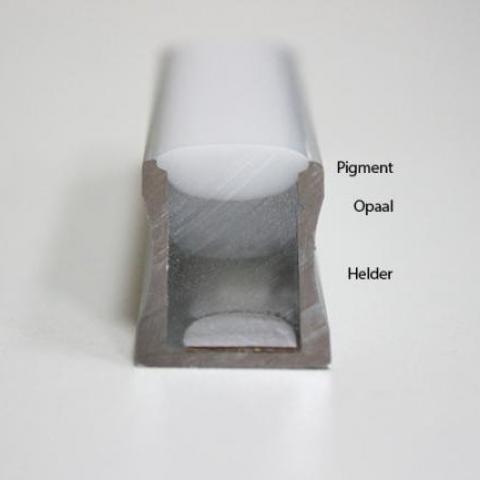
| Cover | Transparent cover optimized for efficient 660 nm transmission |
| PCB Protection | Industrial-grade silicone coating (dust, moisture, chemical resistance) |
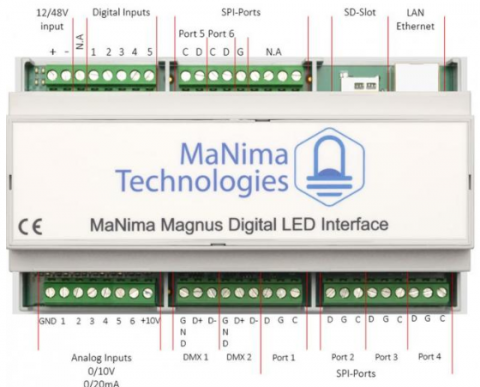
| Thermal Monitoring | Integrated NTC sensor, controllable via MaNima Pollux Industrial System |
| Pulsing/Strobing | Supported when integrated with MaNima Pollux Industrial System |
| Design | Modular and scalable, adaptable from 220 mm up to 3000 mm |
| Dimensions | 24.2 × 16 mm (fixture profile) |
| Environment | Built for harsh industrial conditions (dust, vibration, moisture) |
Applications
Horticulture & indoor farming – enhances photosynthesis, biomass, crop yield
Biological research & photobiomodulation (PBM) – tissue regeneration, wound healing, cell culture
Medical & cosmetic therapy – skin treatments, collagen stimulation, recovery, anti-aging
Material curing (non-UV) – red-sensitive coatings and materials
Machine vision & inspection – contrast imaging, barcode scanning
Also applicable in R&D and specialized lighting setups.
Benefits for Engineers
Efficiency: pulsing + monitoring boosts output with thermal safety
Reliability: thermal feedback protects LED lifetime
Durability: resistant to dust, moisture, mechanical stress
Scalability: modular lengths up to 3000 mm
Integration ready: seamless with MaNima Pollux + automation systems
Integration with MaNima Pollux Industrial System
Real-time NTC monitoring and control
Pulsing/strobing for higher peak radiance
Prevents thermal overload, stable output
PLC/SCADA integration ready
Open API (UDP-based) for custom control